Mohamed Al-Shamey
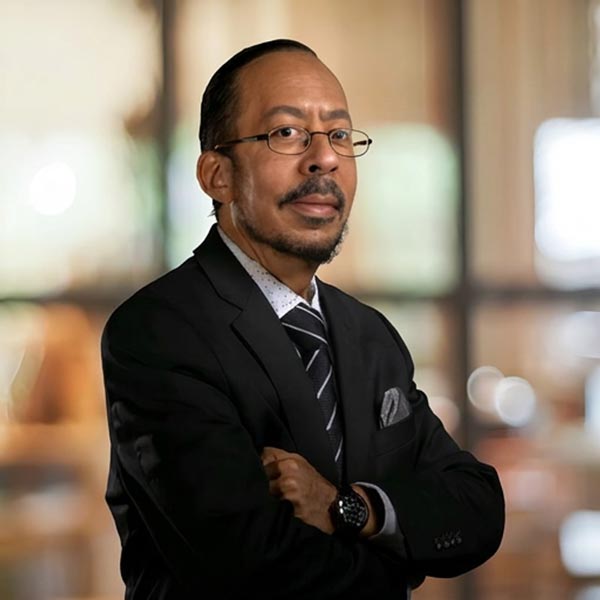
Senior Cybersecurity GRC Consultant
Riyadh, Saudi Arabia
Educational and career journey
When I began my studies at Paris American International University, I had already spent more than two decades in cybersecurity, governance, risk, and compliance. I held the certifications, I advised government entities and financial institutions, and I had delivered training programs across the Gulf region. What I was looking for was something different: a structured academic environment that would push me beyond practice and into research — a place where I could interrogate the assumptions behind the frameworks I had spent my career implementing. PAIU gave me exactly that.
My research at PAIU focuses on artificial intelligence and data privacy — specifically, how organizations can adopt AI responsibly while protecting personal data within evolving regulatory environments. This is not an abstract question in my part of the world. In Saudi Arabia and across the GCC, digital transformation is accelerating at remarkable speed, driven by national visions and ambitious regulators. Organizations are asking hard questions about AI governance, privacy-by-design, and the economics of compliance, and there are few ready-made answers. PAIU’s academic rigor gave me the tools to help build those answers rather than wait for them.
PAIU's contribution to my personal or professional development.
The most immediate impact has been on the depth of my consulting practice. Before PAIU, my engagements were grounded in standards and frameworks — ISO 27001, NIST, and the national frameworks issued by Saudi regulators. My doctoral studies taught me to go further: to evaluate evidence critically, to model the costs and benefits of privacy programs, and to design governance approaches that are defensible not only against an audit checklist but against academic scrutiny. Clients notice the difference. When I advise a financial institution or a government entity on AI governance today, my recommendations are anchored in research, not just in best practice.
My studies also transformed me as an educator and author. Teaching is a large part of my professional life — I deliver certification training and corporate programs in data governance, privacy, and AI across the region. The discipline of academic writing and literature review sharpened how I structure knowledge for others. It gave me the confidence to publish books on AI governance and data privacy for organizations in our region, and to write regularly for professionals navigating these same questions. There is a direct line between the research habits I developed at PAIU and the content I now put into the hands of practitioners.
Perhaps most importantly, PAIU repositioned me professionally. The intersection of AI and data privacy is where the next decade of governance work will happen, and my studies placed me at that intersection early. I am no longer only a consultant who applies frameworks; I am a contributor to the conversation about what those frameworks should become. That shift — from practitioner to practitioner-researcher — is the single most valuable outcome of my time at PAIU.
A Message to Current and Future Students
To those considering or beginning their studies at PAIU, especially mid-career professionals: do not think of your degree as a credential to be collected. Think of it as a laboratory for your own expertise. Bring your real professional problems into your research and bring your research back into your work. The two will strengthen each other in ways you cannot predict. Twenty years of experience taught me how things are done; PAIU taught me to ask why, and whether they could be done better.
I remain grateful to the PAIU faculty and community for creating an environment where working professionals can pursue serious scholarship without stepping away from the careers that give that scholarship meaning. My journey is proof that education, at any stage of a career, creates opportunities — and I am proud to be transforming those opportunities into my own success story.